

Men on the brink
A trio of films with characters on the edge

*This post may contain spoilers for the movies The Roofman, No Other Choice, and One Battle After Another
Christmas break was great for catching up on movies.
This time of the year, I usually watch what has been nominated for the Golden Globes and the Oscars (still to come), together with some other smaller film festivals for more “international” and diverse movies.
The latest three movies from this list that I recently watched had some similarities. Despite their different genres, settings, and even countries, The Roofman, No Other Choice, and One Battle After Another collectively reflect a modern male crisis, where economic pressure and societal breakdown push ordinary men toward criminality as a distorted form of agency.
More broadly, the three stories have a sense of desperation, a lack of control. All of them capture the feeling we currently have that the world is going to hell while we try to make sense of it. The main characters are all lost, but they are also to blame because of their distorted perceptions of what love and relationships really are. Despite the heavy topics, and being mostly either action or drama, they have quite a few funny moments, which certainly make them quite enjoyable to watch.
Out of the three, The Roofman and No Other Choice are much more similar em theme: they explore how middle class men confuses money, comfort and buying stuff with ‘having it all’.
There’s something about these three movies and how they show the current world as a place pushing people to desperate measures. How the three of them kind of feel like the edge of a precipice.
I’m not sure if it’s a sign of our times or not, but it really caught my attention the similarities in these movies, especially in this moment where masculinity has been discussed extensively and where life feels so competitive and hard that you can easily empathize with someone being moved into committing a crime if it’s in the name of their own survival.
The Roofman

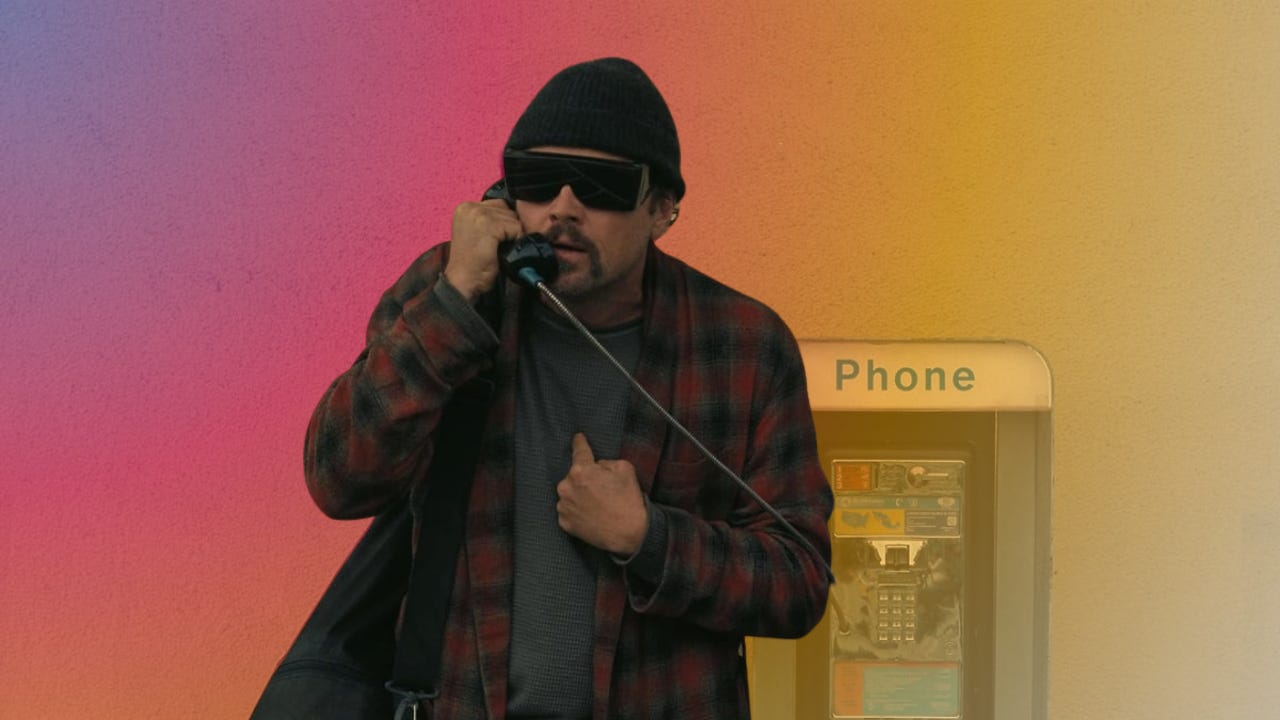
Yes, I know it’s Channing Tatum and that the poster for this movie looks like it’s going to be a dud, but I would say this movie is a solid 7.5 out of 10.
It’s based on the real-life story of Jeffrey Manchester, played by Channing Tatum, an ex-military father-of-three who just can’t quite find his place in the civilian world. His old army buddy Steve (Lakeith Stanfield) reminds him of his particular skill at observation, urging him to put it to good use. Instead, after disappointing his daughter with an underwhelming birthday present, he decides to use it for something less well-advised, robbing not one but 45 McDonald’s.
We keep cheering for Jeffrey through his many ups and downs, but we know he made enough mistakes that cannot really be forgiven. He is a dangerous man, and even though he seems lovable and someone who seems to have simply stumbled into all of this mess, he did choose armed robbery over 45 times. But that’s what makes the movie interesting. It makes you wonder just how close we are to being like that. Someone who thinks that giving a great gift to his daughter is so important that it is worth risking being arrested for it on her birthday.
No Other Choice
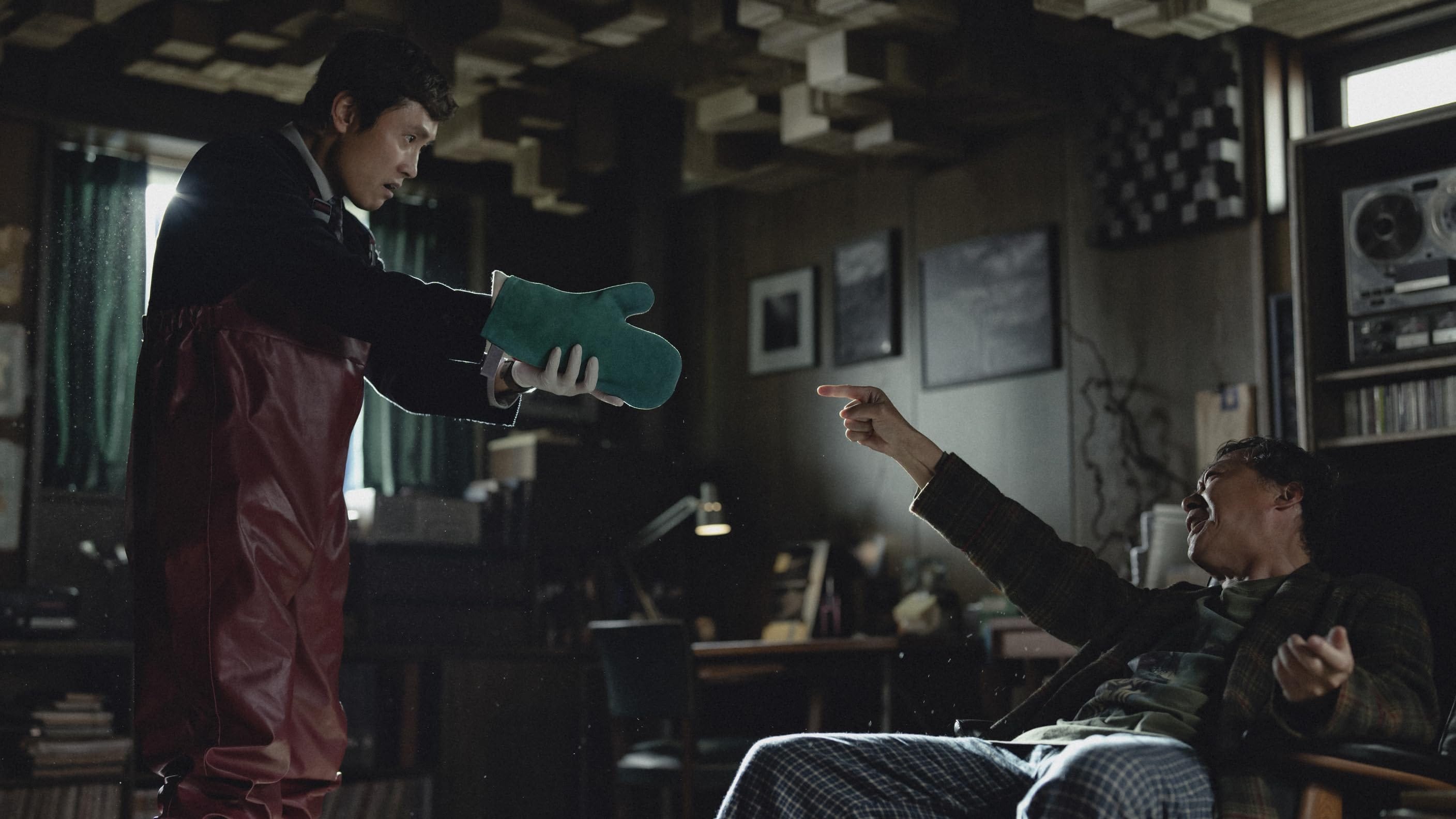
Probably my favorite on the list. Directed by Park Chan-wook who has also brought us movies like Handmaiden and Old Boy, No Other Choice tells the story of You Man-su, a dedicated worker in the paper industry.
It starts with a scene of a perfect family home, where You Man-su the man of the house, is barbecuing eels he received from his work place with his wife, teen son, daughter and two lovely golden retrievers in his back yard.
But those eels he soon discovers mean he is being let go. He is devastated, but without the emotional language to express or understand how profound this loss is to him. He is desperate to reclaim his position as head of the house in the eyes of his wife and children by getting a new job in the paper industry as soon as possible.
To do that, after many failed attempts, he comes up with a desperate and misjudged plan: to kill his competition.
Although it’s maybe longer than it needs to be, this black dramedy explores similar topics to The Roofman but with more interesting scenes and stories. There is, however, a darker tone and a less optimistic attitude compared to The Roofman. It paints a picture where mechanization is coming, people are becoming unimportant and our human intentions, relationships and agency are descending into irrelevance.
One Battle After Another
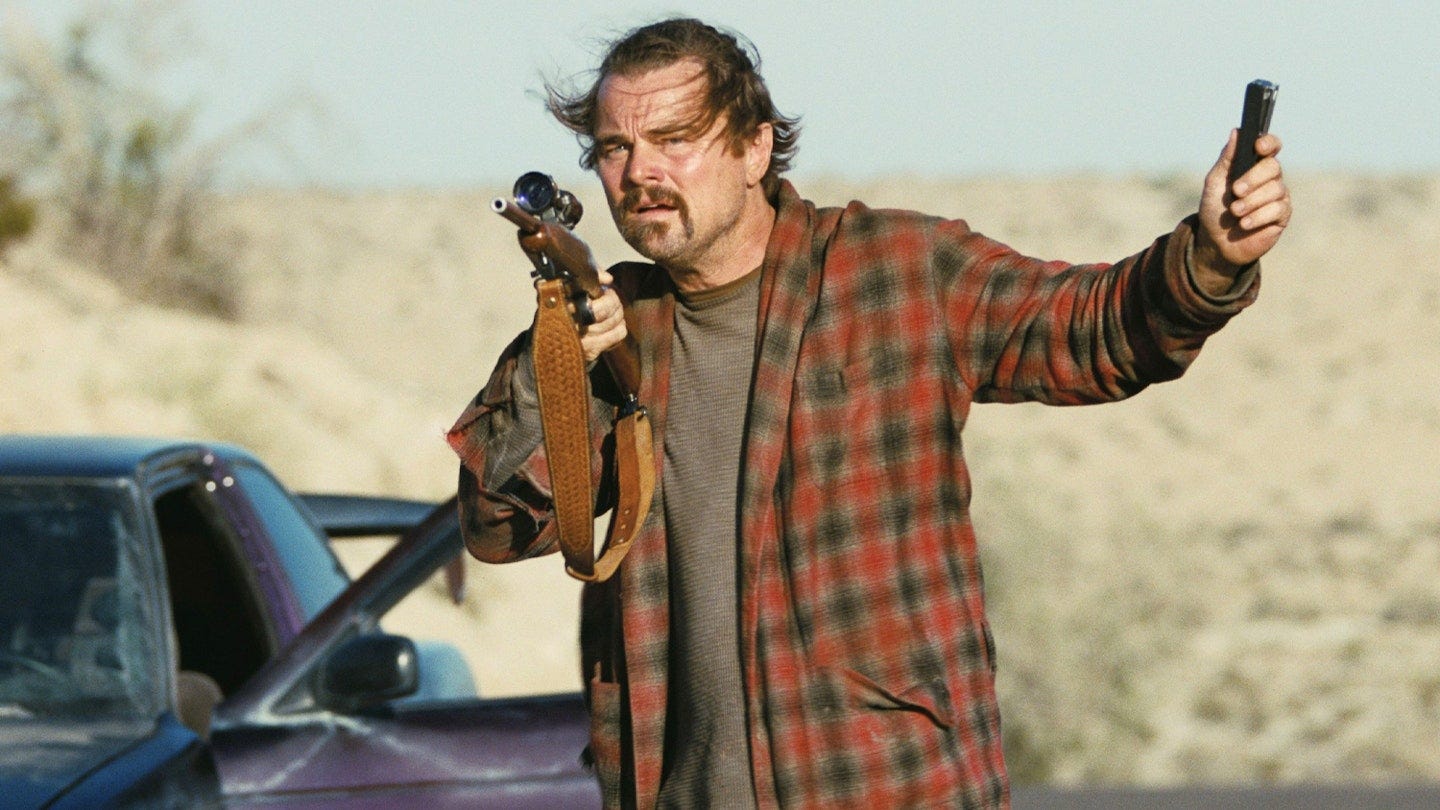
One Battle After Another is an action movie, inspired by Thomas Pynchon's novel Vineland, that leaves little time for the audience to catch their breath as Anderson's camera follows behind ex-member of revolutionary group the French 75/current burnout Bob Ferguson (Leonardo DiCaprio) as he tries to reunite with his kidnapped daughter Willa (Chase Infiniti).
People cannot stop talking about and how great this movie is, and I get it, but I don’t agree THAT much. I’ll maybe write a full review about it because there is such a hype around it is crazy.
The movie certainly delivers on action and emotional stakes and it’s super fun to watch. I just don’t think it push boundaries or offer fresh perspectives for 90% of the characters, which is disappointing given that is has been so praised and it’s very likely to win the best motion picture at the Oscars
Here is good review about how shallow most of the characters who are non-white in One Battle After Another are:

One Battle After Another not only has the same feeling of precipice and uncontrollable change as the other movie in this list, it also has this underlying idea of what a family and the head of the house should be.
Even though on the second act of the movie it shows the daughter Willa as the responsible one in the house, when Perfidia was part of their lives it was clear that Bob wanted to be in a normal household where the mom would act like a mom and they would all just forget about their revolutionary days. Not only that, but his daughter being kidnapped makes Bob step in into the role of family protector, something viewed as a classic masculine trait.
(By the way, ‘kidnapped daughter’ is a trope used in so many action movies before, that it makes it hard to paint this movie as innovative as it’s being hailed on the internet).
In conclusion…
Despite their different tones—from the tragicomedy of The Roofman to the bleak satire of No Other Choice to the blockbuster spectacle of One Battle After Another—a common nerve runs through all three.
Each film portrays a man whose prescribed role in society (as provider, patriarch, or protector) has shattered, leaving him to grasp at violent, criminal, or chaotic acts as a misguided way to reclaim purpose and control.
Collectively, they map the contours of a modern desperation, one born not of being a criminal because they are evil, but of the slow-burn crises of financial precariousness, meaningless work and political instability.
Where Jeffrey Manchester and You Man-su snap under the weight of mundane failure, Bob's revolution feels weightless, suggesting our stories of rebellion are becoming as commodified and empty as the systems they purport to fight.
We may cheer for these desperate acts on screen, but these films force us to ask: in a world that feels increasingly on the brink, what forms of genuine agency and connection are left that don't lead to the edge of that cliff? And how far are we, in our own search for stability and meaning, from that same precipice?